

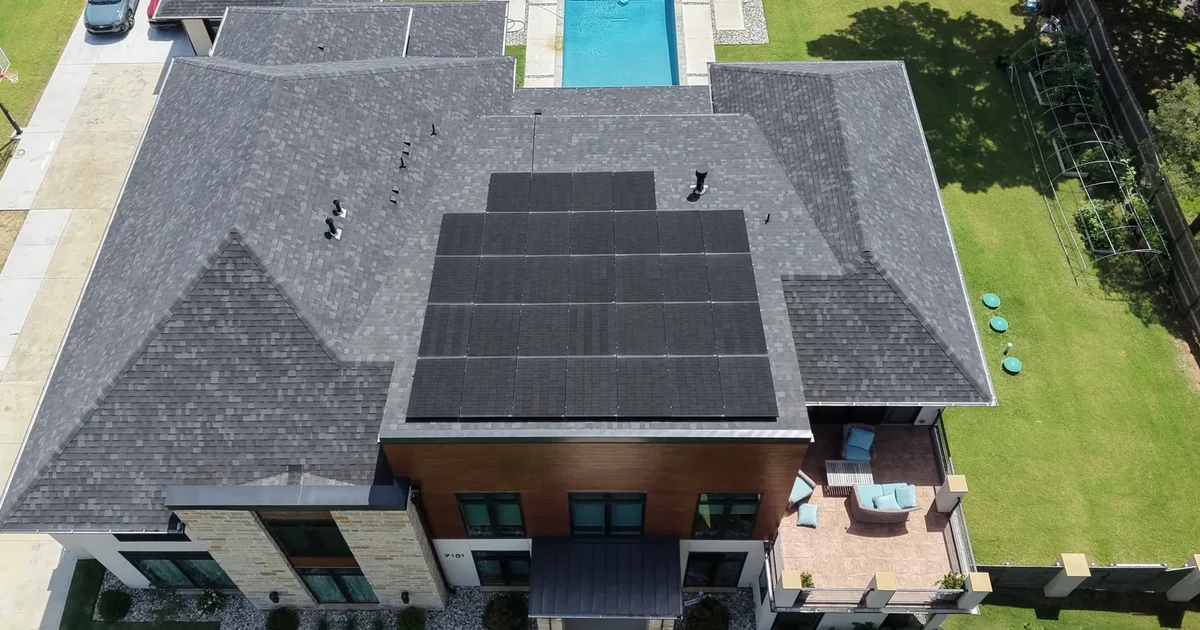
Solar panels can produce electricity for 25–35 years, according to the U.S. Department of Energy’s lifespan guidance. That broad range is not a prediction for an individual Oklahoma roof. Storm damage, installation quality and equipment condition affect how long your panels remain useful.
A panel reaching the end of its warranty doesn’t automatically need to come off the roof. Start with its condition and production history. In Oklahoma, a hail claim or reroof can bring that decision forward even when the panels still work.
Panel lifespan and warranty length are different
A warranty sets conditions for a claim. It doesn’t tell you the day a panel will stop working. Keep the equipment warranty, output warranty and installer workmanship agreement separate when comparing proposals.
| Document | What to check | Why it matters |
|---|---|---|
| Panel product warranty | Covered defects, exclusions and claim requirements | Damage and wear are not automatically covered defects |
| Panel performance warranty | First-year allowance, later output limits and test conditions | The stated power floor differs from annual household energy production |
| Inverter warranty | Exact model, coverage period and replacement terms | Electronics can need service while panels remain useful |
| Workmanship agreement | Roof penetrations, wiring, labor and remedy terms | Equipment coverage may leave installation work outside the claim |
Ask who pays for troubleshooting, shipping, removal and reinstallation if a component fails. Keep the original proposal, equipment serial numbers and warranty documents with your home records. If the original installer is unavailable, the solar company takeover checklist explains what to collect.
How much production do solar panels lose over time?
Degradation is the gradual reduction in a panel’s output as it ages. A performance warranty may allow a different loss in the first year and then a stated annual decline. Use the exact panel model’s terms when evaluating a quote.
Suppose an array produces 10,000 kWh in its first year and later production declines by an assumed 0.5% each year, with weather and every other factor held constant:
| Year | Illustrative annual production |
|---|---|
| 1 | 10,000 kWh |
| 10 | About 9,559 kWh |
| 25 | About 8,867 kWh |
The calculation is 10,000 × 0.995 raised to the number of years after year one. The 0.5% rate is a modeling assumption, not an Oklahoma average or an equipment guarantee. It also does not represent a manufacturer’s first-year or linear warranty schedule.
Actual production moves with sunshine, shade, soiling, downtime and equipment performance. A cloudy month doesn’t prove permanent panel degradation. DOE’s solar performance guidance explains why output needs to be compared with the sunlight and temperature during the same period.
Save monthly kWh totals and service dates. Compare similar seasons, then have a technician account for weather, new shade and downtime before estimating an aging trend. A sudden drop deserves a fault check before you attribute it to age.
What Oklahoma weather changes about the decision
After hail or high winds, review system alerts and inspect from the ground for visible damage or debris. Have a qualified solar professional assess damaged equipment and roof attachments. A panel that still produces electricity can still need inspection after an impact.
Heat can reduce output while panels are hot; that is different from a permanent reduction caused by aging or damage. Compare readings under similar conditions before deciding a lower summer peak means the system is failing. Our Oklahoma weather and solar guide explains seasonal production changes.
Ask for the exact panel’s weather ratings and the mounting design for your roof. Those ratings have defined test conditions; they do not establish that a system will survive every storm. DOE’s hail guidance describes damage risks even for tested modules. Review damage coverage and deductibles with your insurer, and use our hail and solar panel guide to plan an inspection after a storm.
Will the inverter and battery last as long as the panels?
Plan for component service across the life of the array. Panels, inverters, monitoring hardware and batteries have separate functions and warranty terms. A failed inverter does not by itself mean all the panels need replacement.
DOE identifies maintenance and inverter updates as options for improving an existing system. Its rooftop replacement guidance also recommends weighing the cost of new equipment against keeping the current array. Start with a diagnosis and an itemized repair scope.
For batteries, compare time, throughput and capacity-retention conditions separately from panel warranties. Check the Powerwall 3 and FranklinWH aPower S warranty terms when comparing battery options. A battery warranty does not establish a fixed number of years of unchanged backup runtime.
What if the roof needs replacement first?
Review roof condition before installing solar. If roof work is already approaching, compare doing it before the array goes on with paying for a later removal and reinstallation.
For an existing array, a reroof does not automatically require new panels. Compare these scopes:
- Keep and reinstall: inspect the existing equipment, document its condition and include the roof attachments and recommissioning work needed for the new roof.
- Repair during the reset: address identified wiring, mounting or failed-component issues while access is available.
- Replace or redesign: compare the added cost with expected production, available roof space, equipment compatibility and current utility requirements.
A Noble reroof: all 19 panels reused
In August 2026, we removed an array for a homeowner in Noble and reinstalled it two days later. We reused all 19 panels, installed new roof attachments and lag bolts, and confirmed production in Enphase afterward.
The panels stayed in service while the roof attachment hardware changed. That distinction belongs in a reroof proposal: identify which equipment can return to the roof and which mounting parts need replacement. The Noble production check confirmed the system was producing after reinstallation; it does not establish a degradation rate or predict the panels’ remaining life.
A Yukon roof replacement in photos
Our separate Yukon removal and reinstall project shows before-and-after photos of a 19-panel array during roof replacement. The August 6 and August 22 photos show the roof and array at those two stages.
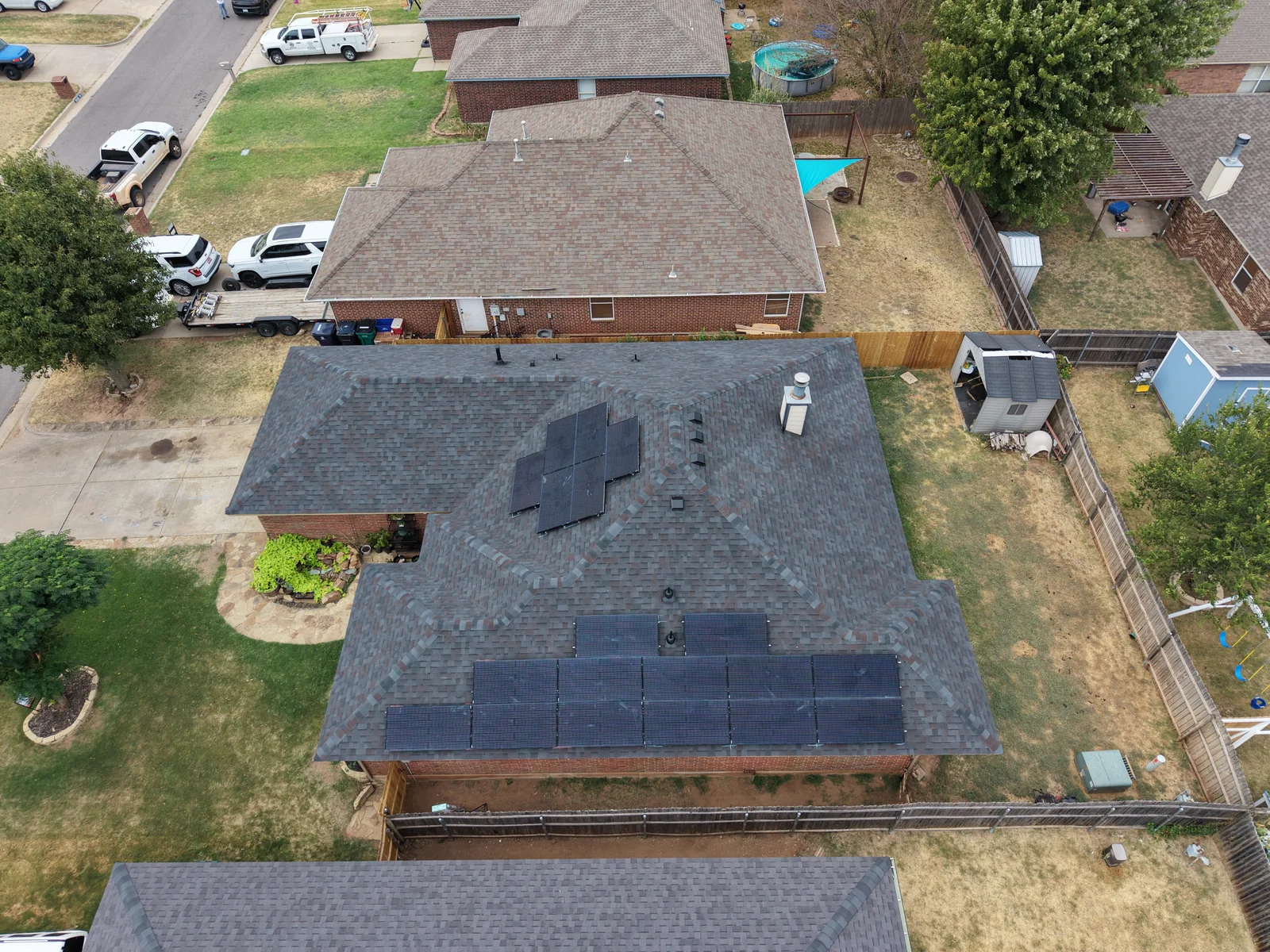
Our solar panel removal and reinstallation service covers coordination with your roofer, equipment storage and electrical checks. Get the solar downtime and responsibility for each stage in writing before roof work begins.
Repair or replace: start with the symptom
| What you notice | What to review first |
|---|---|
| Monitoring stops reporting | App connection, communications and whether the inverter is still producing |
| A sudden production drop | Weather, shade, alerts and a qualified equipment inspection |
| Cracked glass or visible storm damage | A safe professional assessment and documentation of the affected equipment |
| Gradual loss over several years | Comparable production records and the exact panel warranty terms |
| A roof leak or scheduled reroof | Roof inspection and a coordinated removal and reinstall scope |
Avoid climbing onto the array or opening electrical equipment to investigate a fault. Save monitoring screenshots, note when the change started and contact the installer or a qualified service provider. The Oklahoma solar maintenance guide covers routine checks you can make from the ground.
What a useful repair estimate should tell you
Ask for the diagnosed fault, affected equipment models and the checks that support the diagnosis. The estimate should separate the replacement part from labor, roof access and any removal or reinstall work. Ask what the warranty covers and who handles the claim.
If a compatible component can restore safe operation, compare that repair with replacing the array. If parts are unavailable or several components need work, ask for both scopes. Include the roof’s condition and the expected production of each option in the comparison.
Before changing equipment or system capacity, check with your utility about the proposed scope. OG&E, PSO and electric cooperatives have their own interconnection requirements. Our Oklahoma solar permits guide explains which approvals to confirm before work starts.
Do solar panels need replacement after 25 years?
Age alone is not enough to decide. Review safety, measured performance, repair costs and the condition of the roof. A working system can remain useful after its warranty expires; a younger damaged system may need service much sooner.
If replacement makes sense, include removal, transport and an appropriate reuse or recycling route in the scope. Ask which facility accepts the equipment and what the handling costs will be. The remaining value of the old array and the full cost of a new one both belong in the decision.