

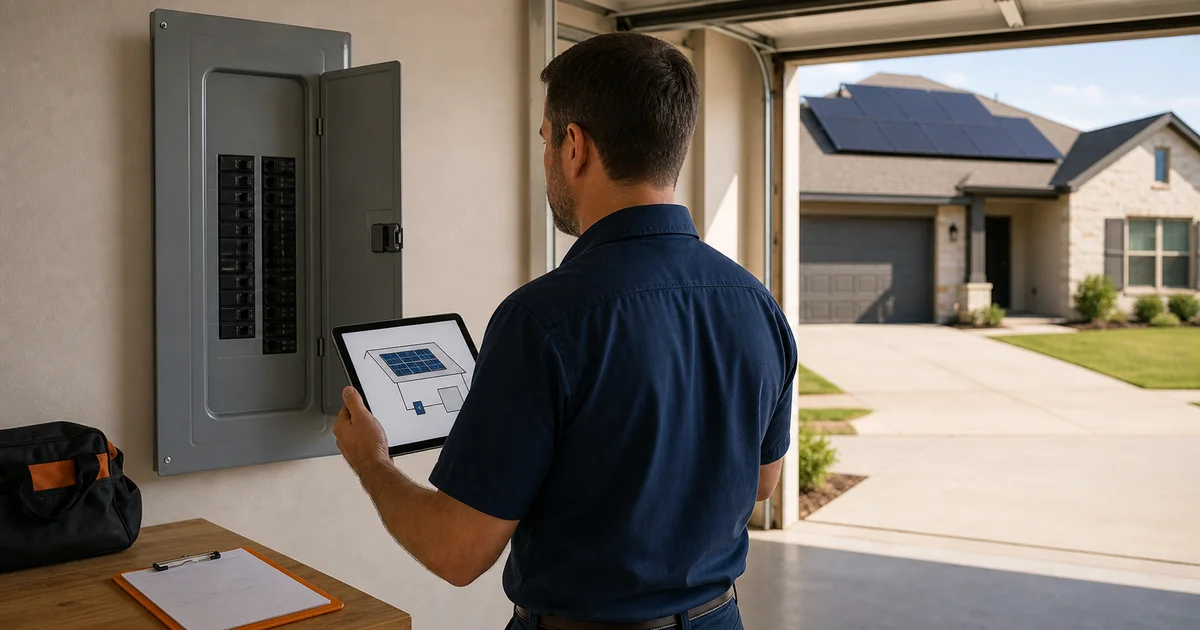
Not every Oklahoma home needs an electrical panel upgrade before solar. The answer depends on panel condition, ratings, breaker space, inverter output and connection method. A 100-amp label calls for review, not automatic replacement.
Start with a safe homeowner check
You can collect useful information without removing the panel cover or touching any wiring. Keep the metal trim around the breakers in place. An electrician should handle everything behind it.
Take clear photos of:
- The full panel and the wall around it
- The breaker faces and circuit directory
- The main breaker’s amp marking
- The manufacturer and model label, if it is readable without removing a cover
- The meter and nearby service equipment from a safe distance
Also list what you plan to add. Solar alone creates a different design question than solar with battery backup, a Level 2 EV charger, a heat pump or new shop equipment.
Stop the checklist if you notice heat damage, a burning odor, unusual buzzing or repeated breaker trips.
The Electrical Safety Foundation International recommends having a licensed electrician inspect those warning signs.
What does a solar panel review check?
A solar panel review checks equipment condition, main-breaker and bus ratings, breaker space, planned solar output and possible connection methods. It also checks existing and planned loads, then matches the design to city code and the serving utility.
The main breaker does not tell the whole story. The panel’s bus rating, listed equipment, breaker arrangement and proposed solar connection also affect the design.
Solar is not the same as adding another home load. The design must account for utility power and solar power feeding the electrical system. An EV charger, electric appliance or heat pump adds load and requires a separate capacity review.
The U.S. Department of Energy notes that solar connections have specific panel-sizing, labeling and breaker-placement requirements.
The installer must also coordinate the local permit and utility interconnection process.
A 100-amp panel is not an automatic no
A 100-amp main breaker deserves a close review, especially if the panel is crowded or the home will add large electric loads. It still does not prove that a 200-amp service upgrade is required.
The same is true when no breaker slots appear open. Physical space is one factor, but it is not the same as electrical capacity. A qualified electrician must review both.
ENERGY STAR’s homeowner guidance treats panel size and empty breaker spaces as screening clues. An electrician’s capacity review comes next.
The review can lead to more than one answer
The site review and final design can produce several valid paths:
- Use the existing panel. Its condition, ratings, space and approved connection method support the planned solar system.
- Change the solar connection or design. A different approved approach may fit the existing equipment.
- Replace or reorganize panel equipment. The project may need panel work without increasing the utility service size.
- Upgrade the panel and service. The scope may extend to the meter socket, service conductors or utility equipment.
- Manage new loads. If EV charging or other large loads create the constraint, load management or a smart panel may be part of the answer.
The right choice should be tied to a documented constraint. “Your panel is old” or “solar always needs 200 amps” is not enough explanation for a replacement quote.
Ask these questions when an upgrade appears in the quote
A useful proposal should identify the reason for the work and what is included. Ask:
- Which panel rating, condition or code requirement blocks the current design?
- Is the issue breaker space, solar interconnection, existing household load or damaged equipment?
- Was another approved connection method considered?
- Does the price cover only the panel, or also the meter socket, service conductors and utility coordination?
- Who handles the permit, inspection and utility paperwork?
- Does the plan include a future battery, EV charger or other major load?
These questions let you compare the electrical scope instead of comparing one unexplained line item against another.
Oklahoma permits and utility approval come after the design
The serving utility and local inspection authority must match the property address. Do not assume every home in one city has the same utility.
Our Oklahoma solar permit guide explains the two approval tracks. Local inspection does not replace utility approval, and the utility shown on the electric bill controls the interconnection path.
Before signing, verify that the electrical contractor holds a current Oklahoma license.
The Oklahoma Construction Industries Board recommends checking the license status before work begins.
Get the panel answer before the solar design is final
Panel work should not arrive as a surprise after the solar contract is signed. The site review should settle the condition, ratings, connection method and future-load plan before permit drawings are finished.
Affordable Solar checks those details as part of the project scope. If the existing equipment is the constraint, review our electrical panel upgrade service.
If the panel works, the design should say that clearly too.